
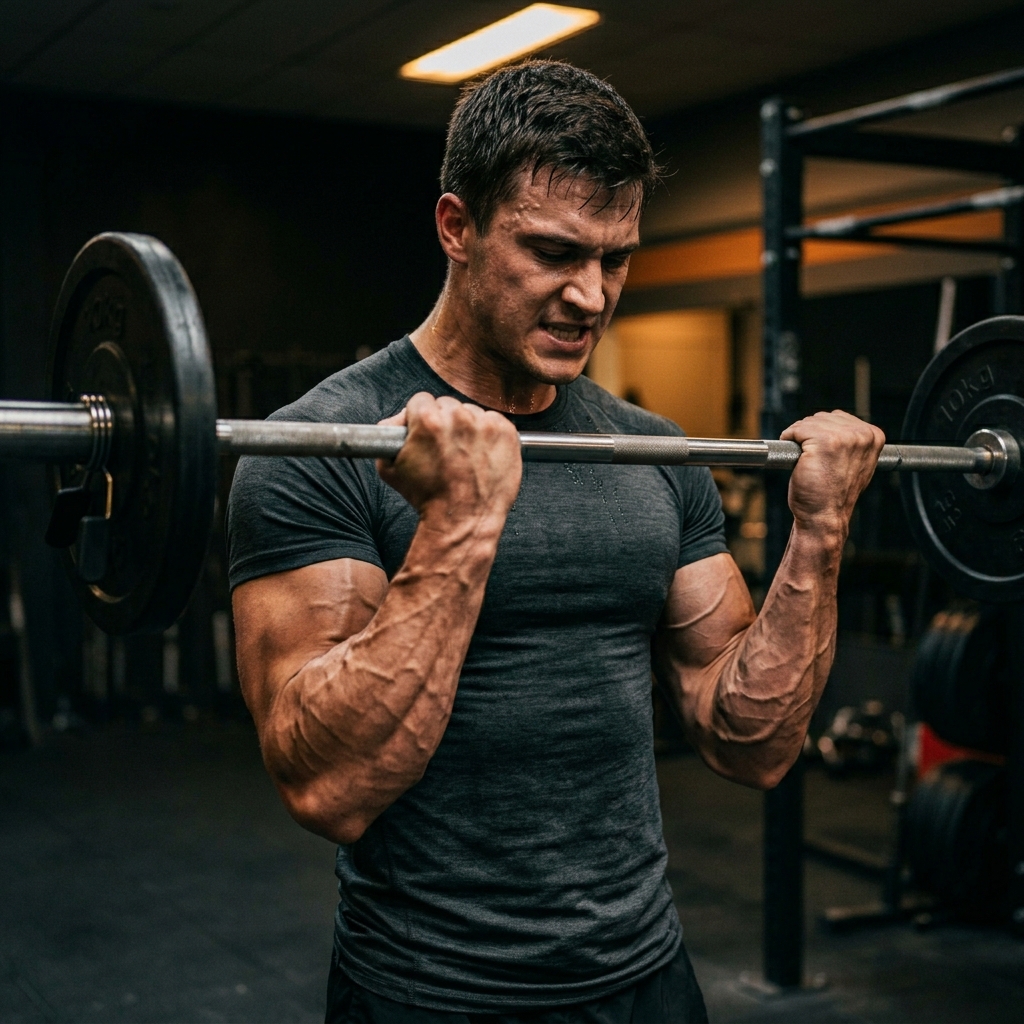
A bicep workout is one of the most searched things in fitness. And yet most people do it completely wrong.
They grab a dumbbell, curl it up, and wonder why their arms aren’t growing after months of training. The problem isn’t effort – it’s selection and execution. Your biceps are a small muscle group. They respond to tension, full range of motion, and variety. Give them that, and they grow. Skip it, and you’ll keep spinning your wheels.
This is the only bicep guide you need.
Why most people’s biceps don’t grow.
The bicep has two heads – the long head and the short head. The long head sits on the outer side of your arm and creates the peak when you flex. The short head sits on the inner side and adds thickness and width.
Most people only do standard curls, which hit both heads but emphasize neither. A complete bicep workout needs exercises that target both heads deliberately – and that train the brachialis underneath, which pushes the bicep up and makes your entire arm look bigger.
One rule before you start: control the negative. The lowering phase of every curl builds more muscle than the curl itself. Slow it down.
The 6 best bicep exercises.
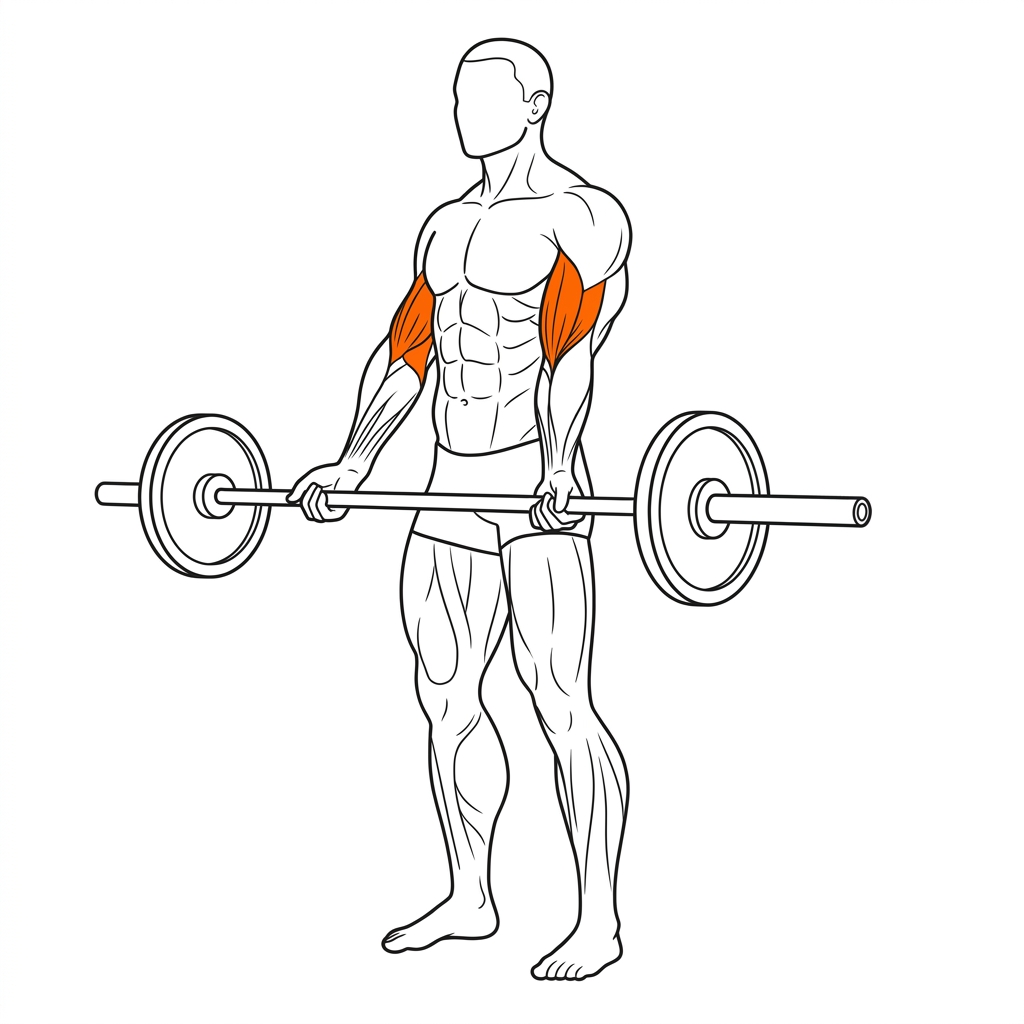
Stand with a shoulder-width grip, palms facing up. Curl the bar to shoulder height, squeeze at the top, lower slowly over 3 seconds. Keep your elbows pinned to your sides – if they’re swinging forward, the weight is too heavy.
The barbell curl is the foundation of any bicep program. It allows you to move the most weight, which means the most mechanical tension – the primary driver of muscle growth. Start here every session.
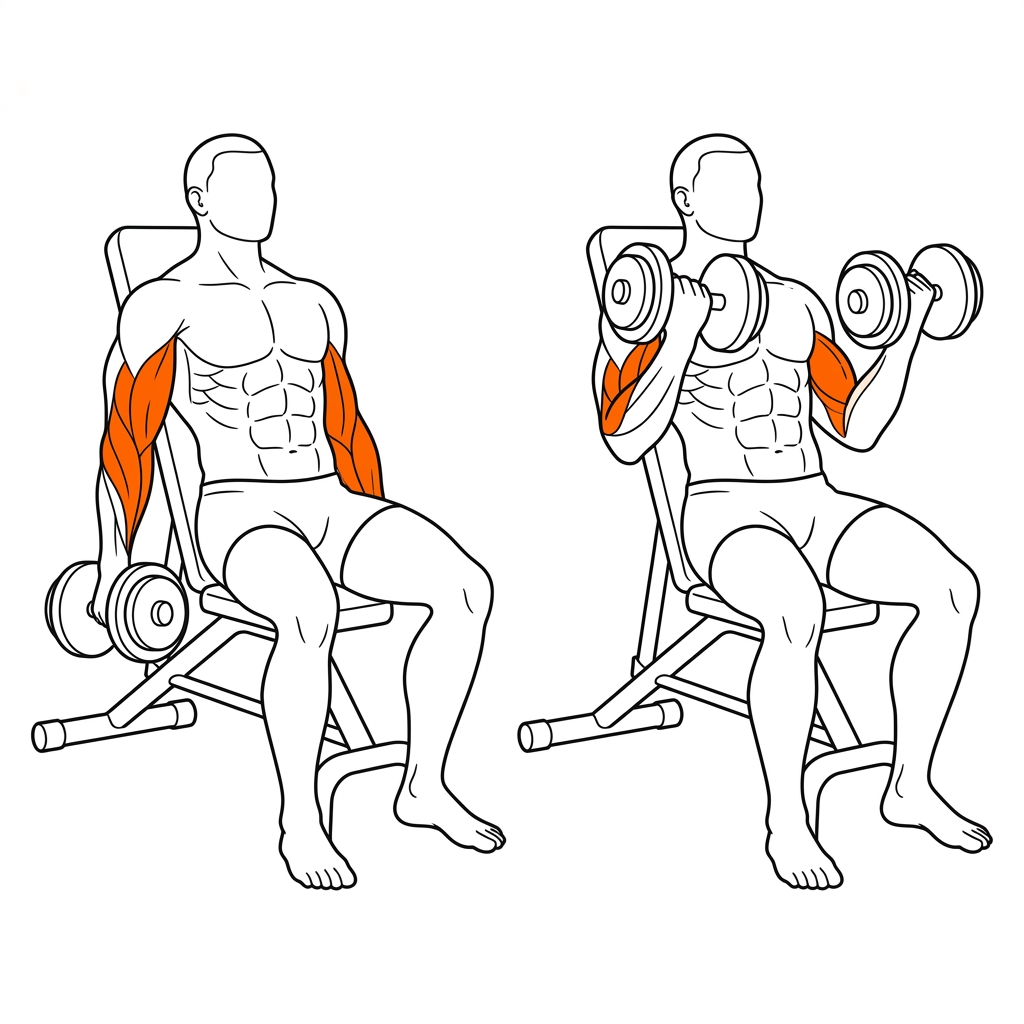
Set an incline bench to 45–60 degrees. Sit back, let your arms hang straight down behind your body. Curl both dumbbells up simultaneously.
The incline position stretches the long head of the bicep at the bottom of the movement – a position standard curls never reach. This stretch under load is one of the most effective stimuli for bicep growth. It will also humble your ego: use significantly less weight than your normal curl.
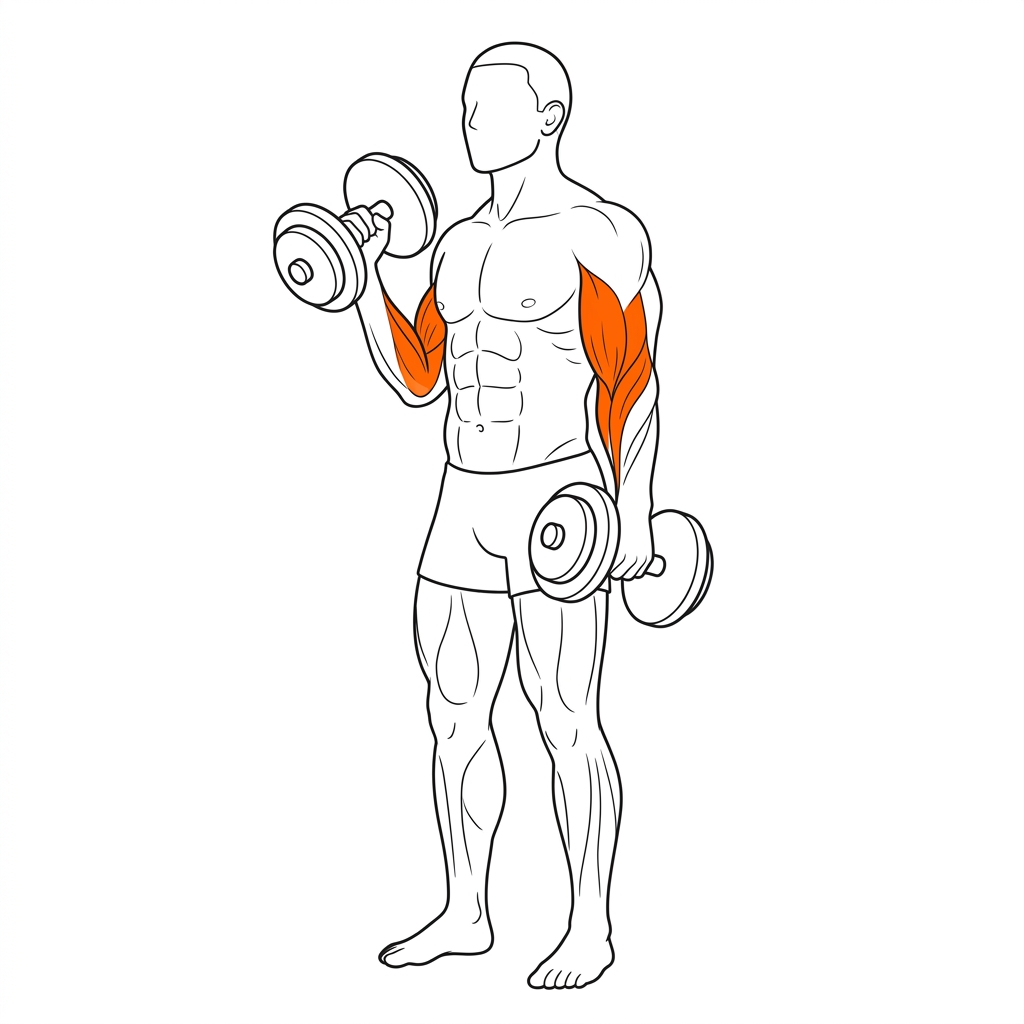
Neutral grip, thumbs pointing up. Curl the weight to shoulder height and lower slowly. Keep your wrists straight throughout – don’t let them rotate.
Hammer curls build the brachialis and brachioradialis – the muscles that sit underneath and beside the bicep. Developing these muscles pushes the bicep upward, creating a fuller, thicker arm from every angle. This is one of the most underrated arm exercises you can do.
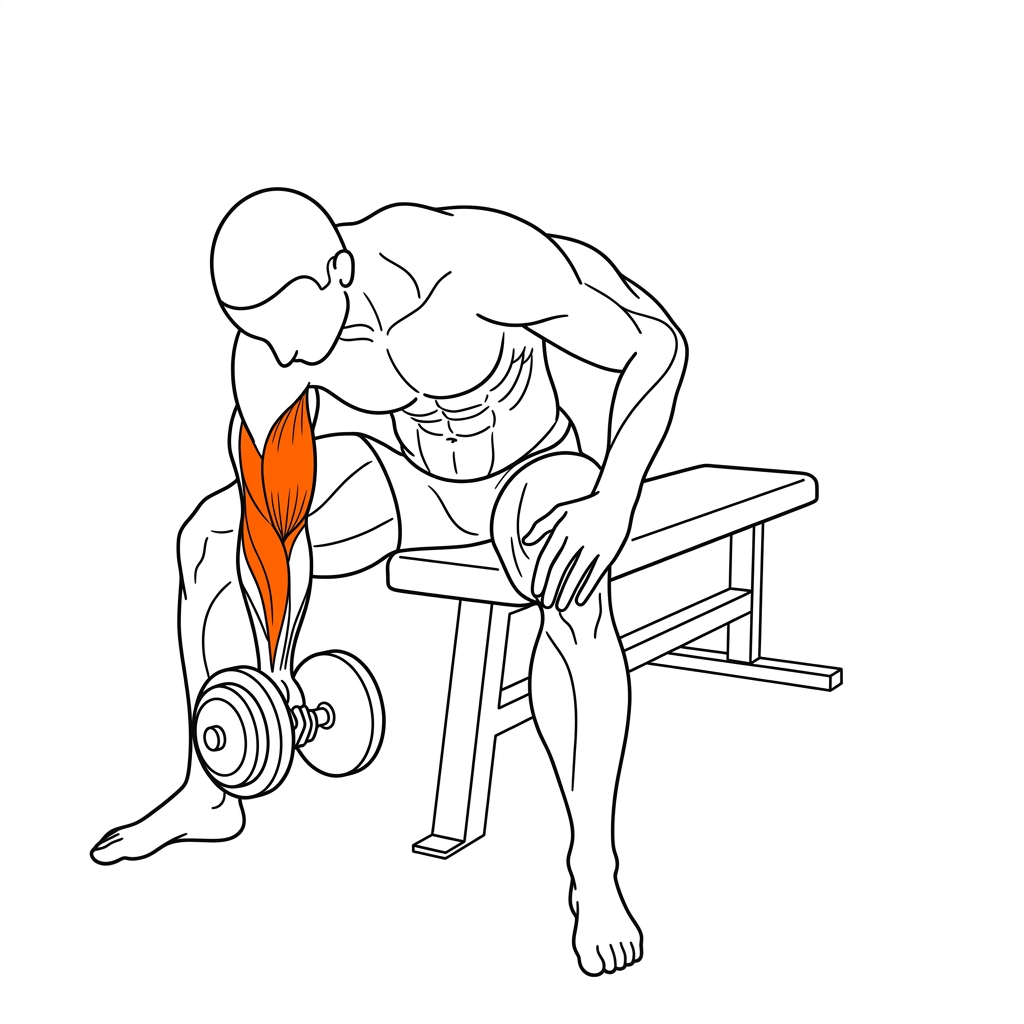
Sit on a bench, lean forward slightly, and brace the back of your upper arm against the inside of your thigh. Curl the dumbbell up, squeeze hard at the top, lower fully.
The concentration curl isolates the bicep completely – there’s no way to cheat or use momentum. It emphasizes the short head and the peak. The squeeze at the top matters: hold it for one full second before lowering.
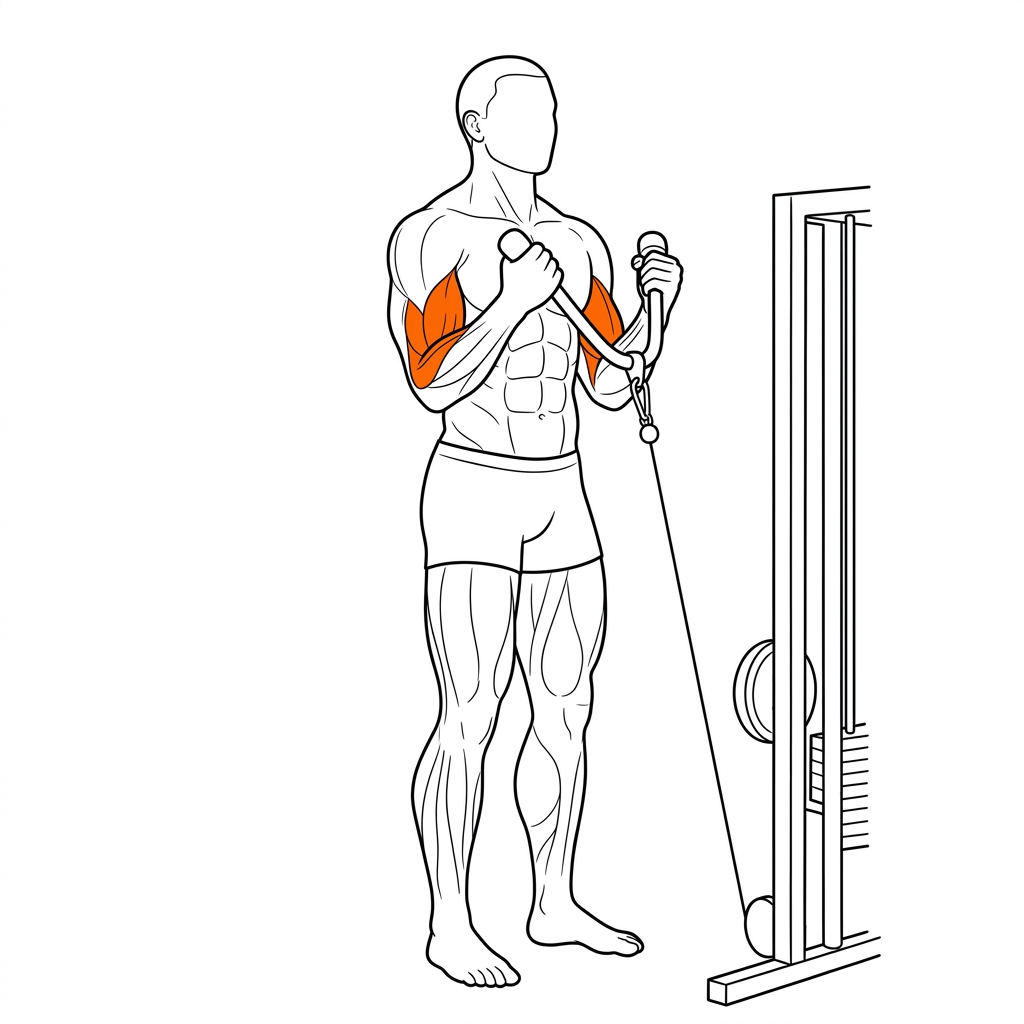
Attach a straight bar to a low cable pulley. Stand back slightly so there’s tension at the bottom. Curl to shoulder height, lower slowly.
The advantage of cables over dumbbells: constant tension throughout the entire range of motion. With dumbbells, tension drops at the top and bottom. With cables, the muscle is working from the first inch to the last. Add this after your free weight work for a completely different stimulus.
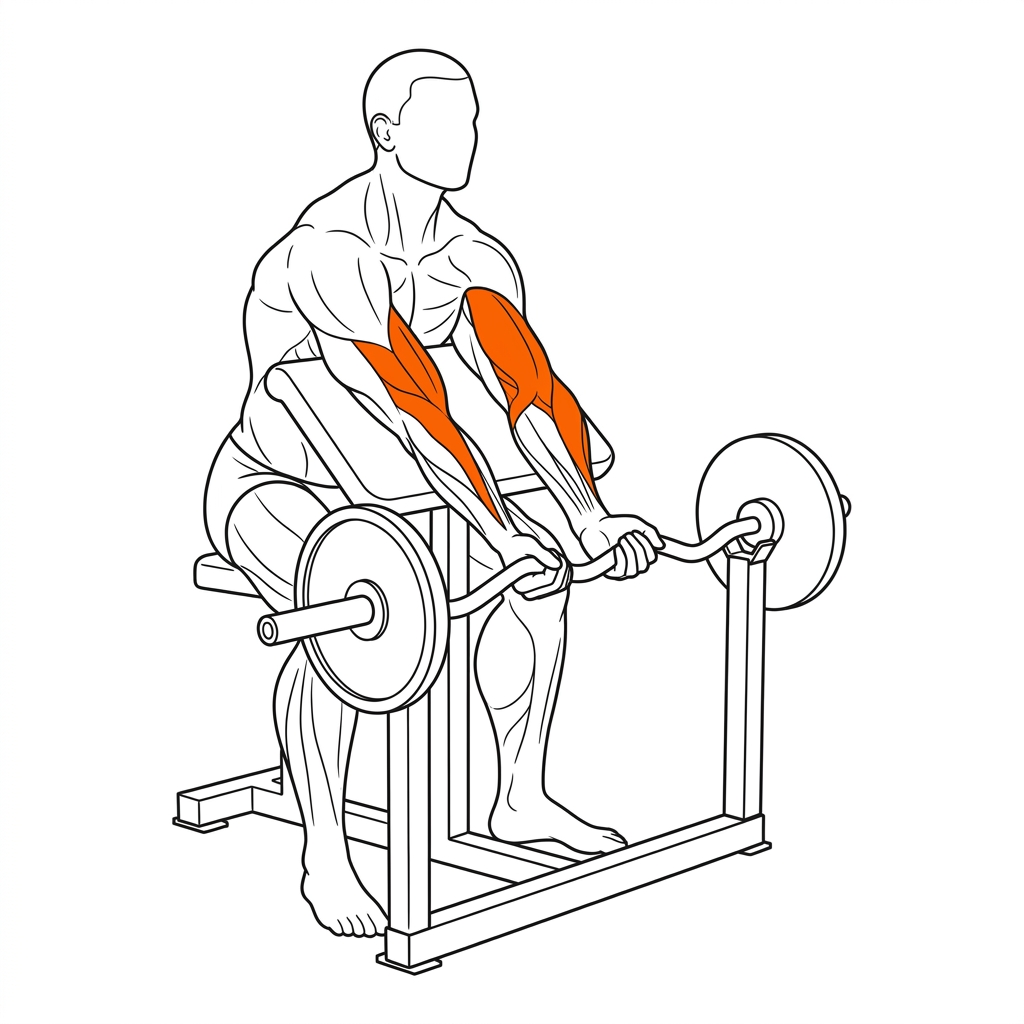
Use a preacher bench or the angled side of an incline bench. Rest the back of your upper arms on the pad, grip the EZ-bar at the inner angle. Curl up, lower slowly – don’t let the weight drop.
The preacher curl eliminates all momentum. Your upper arm is locked against the pad, which means the bicep has to do all the work. It hits the lower portion of the bicep and the short head particularly hard. Don’t rush the lowering phase – that’s where most of the growth stimulus happens.
21s.
They look impressive in the mirror. They feel brutal. They’re a waste of your training time.
The 21 protocol – 7 reps in the bottom half, 7 reps in the top half, 7 full reps – sounds clever on paper. The reality: to grind through all 21 reps, you have to drop the weight to roughly half of what you’d normally curl. That kills the mechanical tension your biceps actually need to grow.
You’re trading the strongest growth driver (heavy mechanical tension) for a savage pump. The pump feels good. It doesn’t build muscle.
The half-reps don’t fix it either. Partial range of motion has a place in advanced training, but only as an addition to full-range work – not as a replacement for it.
Use that time for one extra set of barbell or incline dumbbell curls. More tension. More growth. Less wasted effort.
The complete workout at a glance.
| Exercise | Sets | Reps |
|---|---|---|
| Barbell Curl | 3 | 8–10 |
| Incline Dumbbell Curl | 3 | 10–12 |
| Hammer Curl | 3 | 12 |
| Concentration Curl | 3 | 12–15 each |
| Cable Curl | 3 | 12–15 |
| EZ-Bar Preacher Curl | 3 | 10–12 |
How often should you train biceps?
2–3 times per week is the sweet spot. Your biceps also get significant work on any pulling exercise – rows, pull-ups, lat pulldowns. Factor that in.
If you train back and biceps on the same day, do back first. Your biceps need to be fresh for pulling movements. Doing curls beforehand pre-fatigues them and reduces your performance on every row and pull-up.
Bicep growth is slower than most people expect. The bicep is a small muscle. Don’t expect dramatic changes in four weeks. What you can expect: consistent progressive overload – adding small amounts of weight over time – combined with controlled technique will produce noticeable changes in 8–12 weeks. That’s not a long time in the context of your entire life.
Stop chasing the pump. Chase the progressive overload.
Looking for more arm training? Check out our Forearm Workout – the perfect complement to bicep day.