
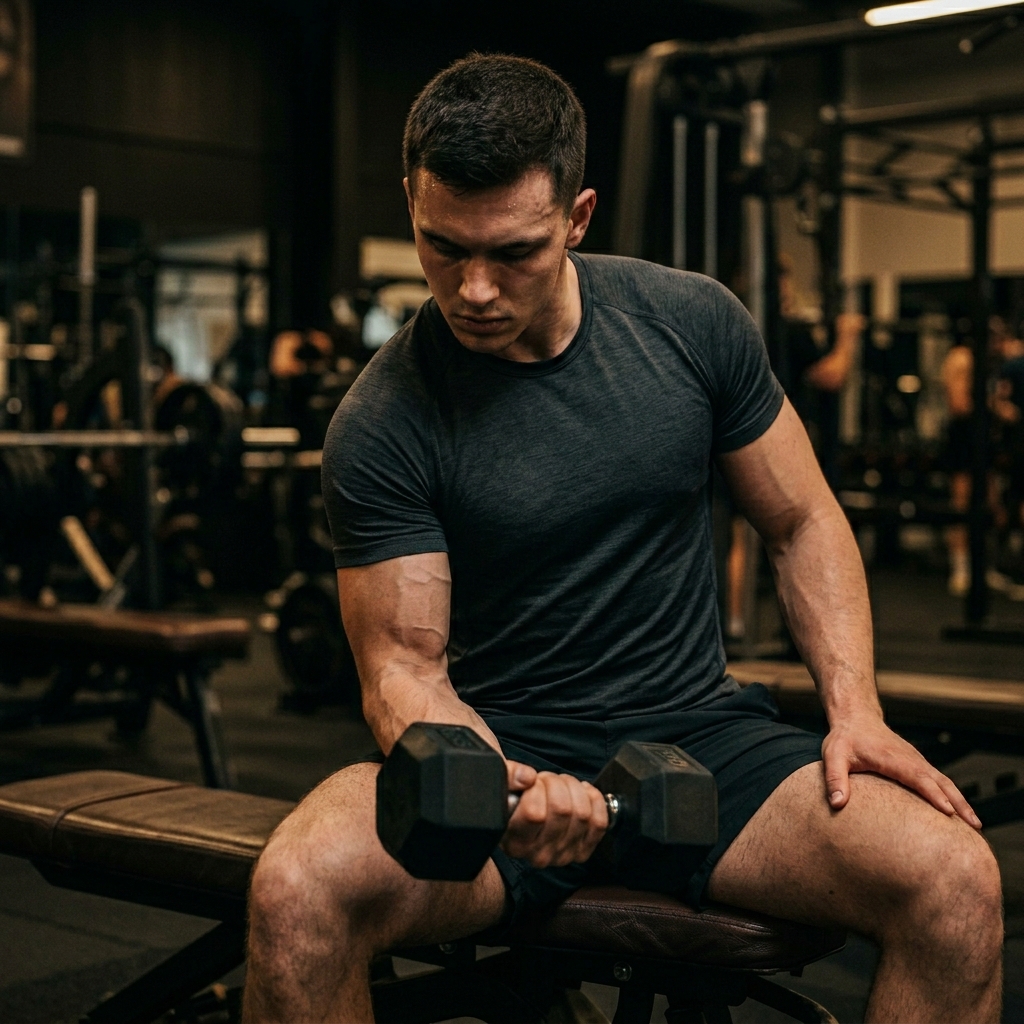
A forearm workout is one of the most overlooked parts of arm training. Most people train chest, back, and biceps – then they wonder why their grip gives out before their back does on deadlifts. Or why their arms look unbalanced despite months of training.
Here’s the truth: forearms are one of the most visible muscle groups on your body. Strong forearms don’t just look good – they directly improve every pulling movement you do in the gym.
This is the only forearm guide you need.
Why forearm training actually matters.
Your forearms contain over 20 muscles that control grip, wrist movement, and elbow flexion. When they’re weak, you’ll feel it everywhere – deadlifts, rows, pull-ups, even bench press suffers because your wrists can’t stay stable under load.
Beyond performance, grip strength has been linked to overall health and longevity in multiple studies. It’s one of the simplest markers of how strong your body actually is.
One rule before you start: always train forearms at the end of your workout. Fatigued forearms will kill your grip on every other exercise.
The 6 best forearm exercises.
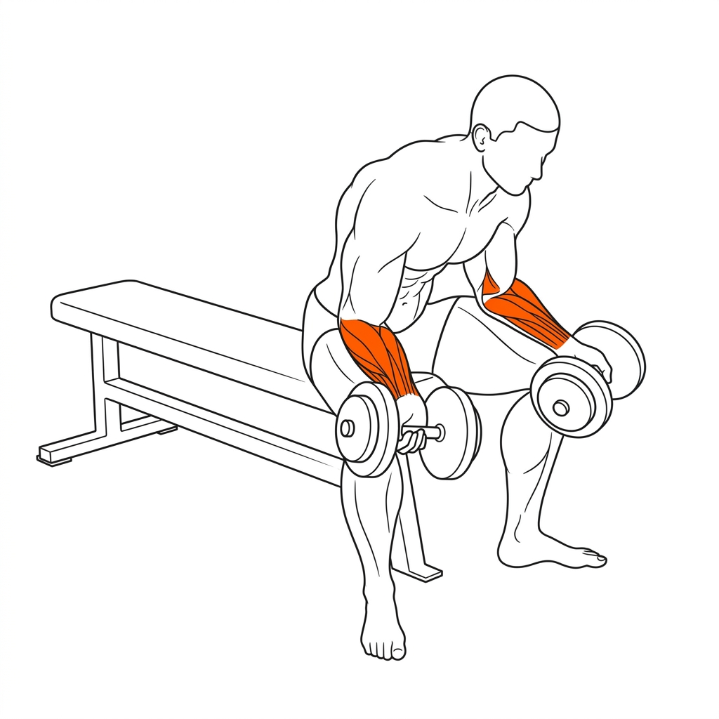
Sit on a bench, rest your forearm on your thigh, palm facing up. Hold a dumbbell and curl your wrist upward slowly. Lower it all the way down, full range of motion. This targets the flexors – the muscles on the underside of your forearm responsible for grip strength and size.
Keep the weight light enough that you can feel the muscle working, not just your joint moving.
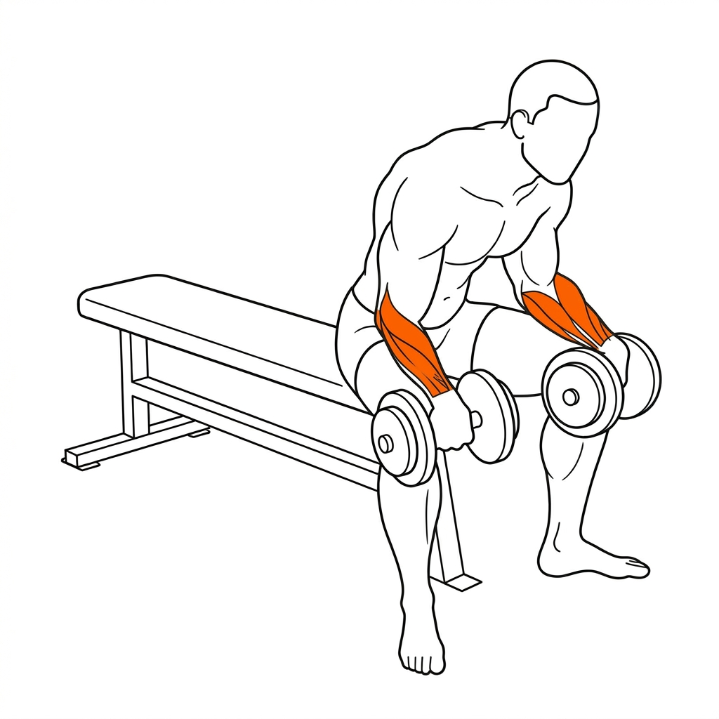
Same position, but palm facing down. This hits the extensors on top of your forearm – the muscles most people completely skip. Balanced forearm training means training both sides. Skipping this is why a lot of people develop wrist and elbow pain over time.
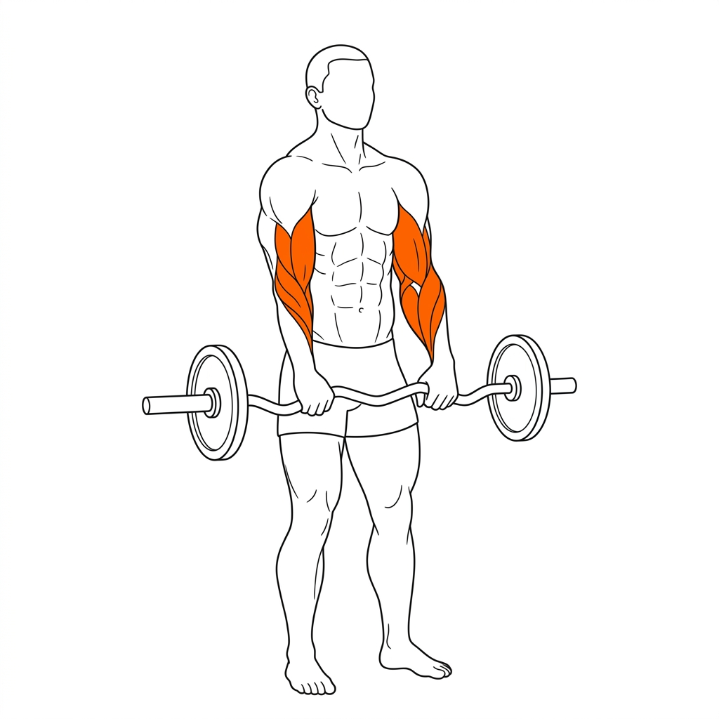
Stand up, hold a barbell or dumbbells with an overhand grip (palms down), and curl as you normally would. This targets the brachioradialis – the most powerful forearm muscle, running along the thumb side of your arm. Building this muscle is what makes forearms look thick and full from the front.
Use slightly less weight than your normal curl. Control the movement.
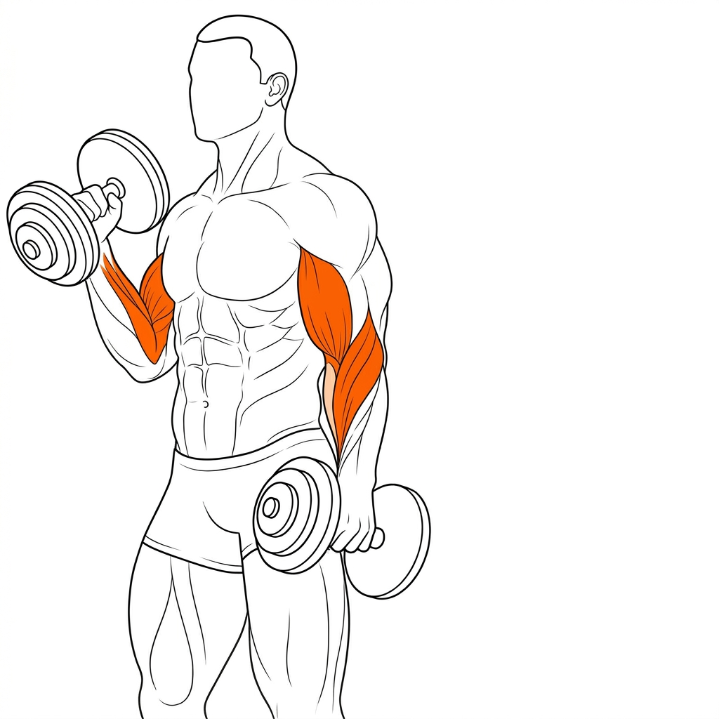
Neutral grip, thumbs pointing up. Curl the weight to shoulder height and lower slowly. Hammer curls work both the brachioradialis and the brachialis – the muscle underneath your bicep that pushes it up and makes your entire arm look bigger. This is one of the most underrated arm exercises, period.
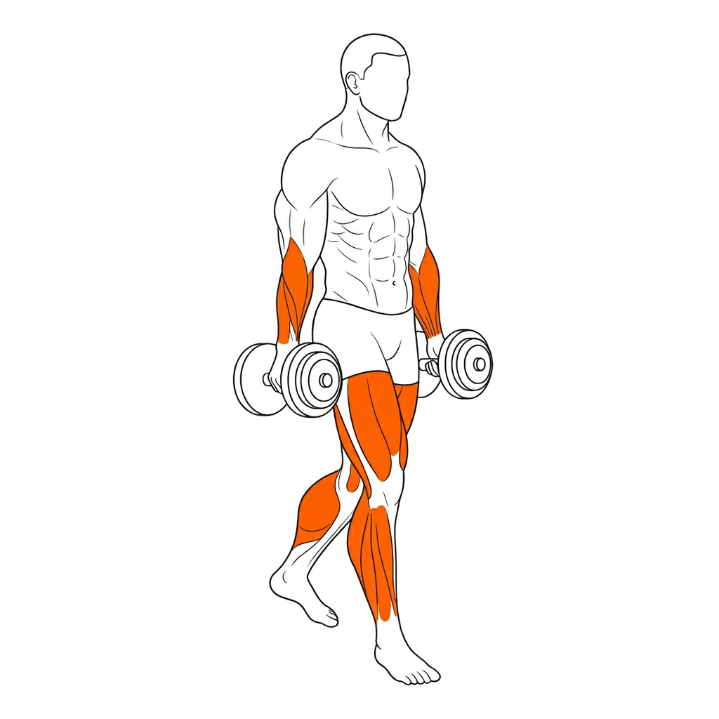
Pick up two heavy dumbbells, stand tall, brace your core, and walk. That’s it. Farmer’s carries train grip strength in the most functional way possible – under sustained load. They also hit your traps, core, and shoulders as a bonus.
Start at roughly 50% of your bodyweight split between both hands. Go heavier as your grip improves.
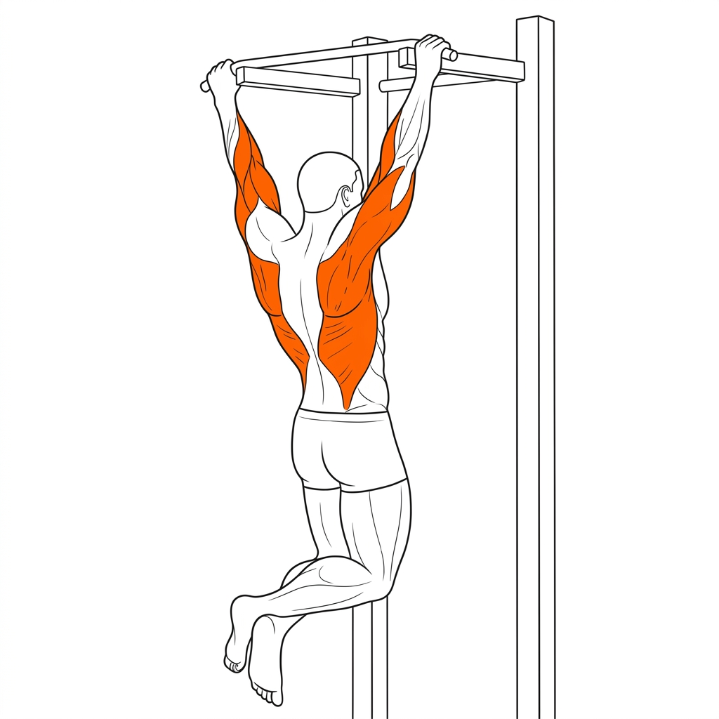
Grab a pull-up bar with both hands, let your body hang. Don’t just hang passively – actively squeeze the bar and keep your shoulder blades slightly engaged. Dead hangs build grip endurance and decompress your spine at the same time. If you can’t hang for 30 seconds yet, keep your feet lightly on the ground to reduce the load.
Hand grippers.
They’re everywhere in fitness content. Every YouTube ad, every Instagram thumbnail, every “build crazy grip strength” video. They look hardcore and they sell well.
The reality: a hand gripper trains exactly one thing – crushing strength. Your forearms have over 20 muscles that control wrist flexion, wrist extension, finger flexion, supination, pronation, and grip endurance. A hand gripper hits one of those functions, in one direction, with limited range of motion.
The bigger problem is progression. You buy a “Level 1” gripper, master it, then need a “Level 2” – at full price again. Then Level 3. That’s a business model, not a training tool.
You’re paying €30–100 for a tool that does what a heavy dumbbell or a pull-up bar already does – and worse.
Spend that money on a heavier set of dumbbells. Do Farmer’s Carries and Dead Hangs. Real grip strength, built progressively, with tools you already own.
The complete workout at a glance.
| Exercise | Sets | Reps |
|---|---|---|
| Wrist Curls | 3 | 15 |
| Reverse Wrist Curls | 3 | 15 |
| Reverse Curls | 3 | 10–12 |
| Hammer Curls | 3 | 12 |
| Farmer’s Carry | 3 | 40–50 sec |
| Dead Hang | 3 | 30–45 sec |
How often should you train forearms?
2–3 times per week is the sweet spot. Research consistently shows that training forearms more than that doesn’t produce better results – and it will interfere with your grip on other exercises.
Add this workout after arm day or back day when your forearms are already warmed up from the session. Don’t add a separate forearm day.
Progress on forearm exercises is slower than with larger muscle groups. You won’t see dramatic changes in two weeks. But train consistently for 8–12 weeks, add weight progressively, and the difference will be noticeable – in the mirror and on the bar.
Strong forearms are earned, not given.
Want to train your full arm? Check out our Bicep Workout – the perfect complement to forearm day.