
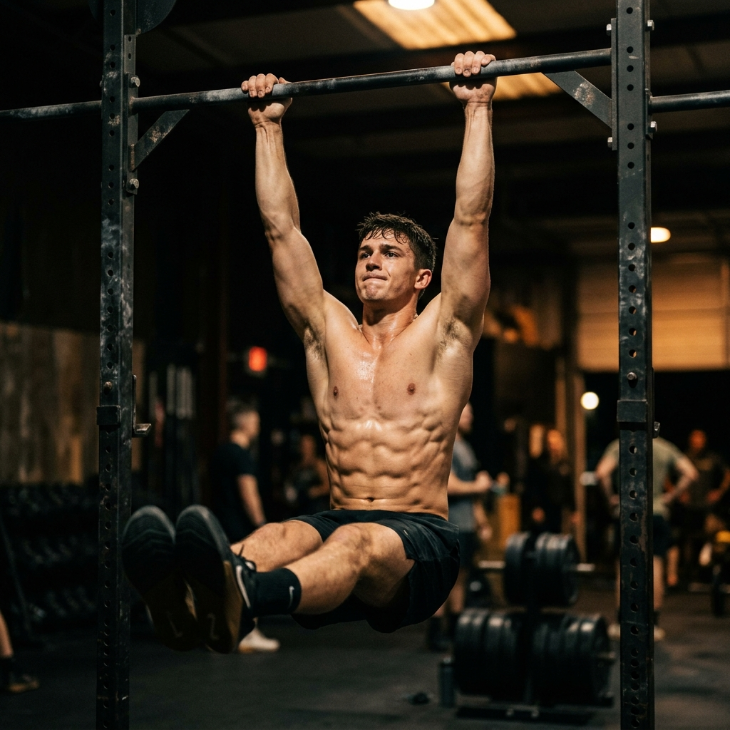
The best abs workout isn’t the one with the most crunches. Let’s get one thing out of the way first.
No ab workout will give you visible abs if your body fat is too high. That’s not negativity – that’s just how the body works. Spot reduction is a myth. You can’t “crunch away” belly fat, and anyone who tells you otherwise is selling something.
What ab training actually does: it builds the muscles underneath. Strong, dense core muscles that show when your body fat gets low enough – and that make every other exercise you do in the gym more effective.
That said, most people train abs completely wrong. They do hundreds of crunches, ignore their obliques and lower abs entirely, and wonder why nothing changes. This guide fixes that.
Why most ab workouts don’t work.
The rectus abdominis – the “six-pack muscle” – runs from your chest to your pelvis as one continuous muscle. You can’t isolate upper or lower abs. But you can emphasize different regions depending on the movement.
A complete ab workout needs three things:
The 6 exercises.
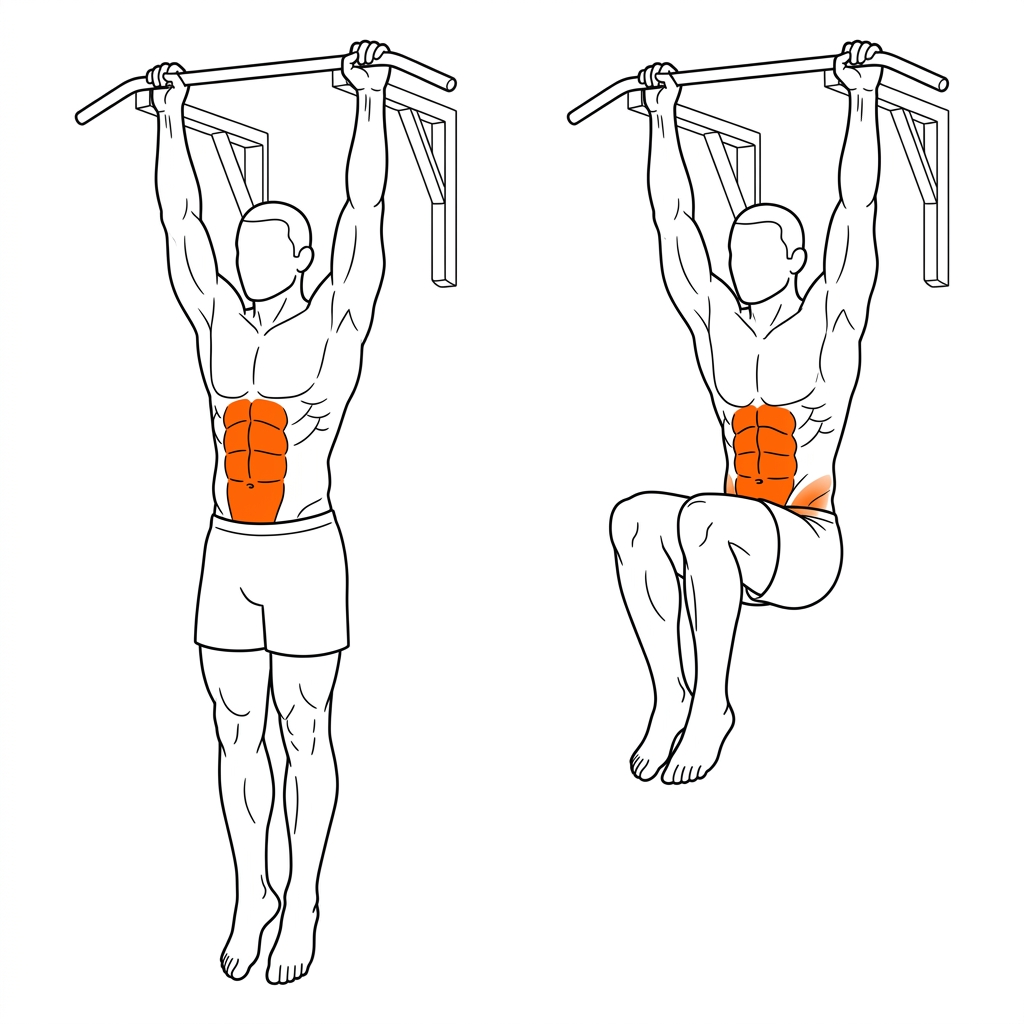
Hang from a pull-up bar, arms fully extended. Lift your legs straight up – or bend your knees if you’re starting out. Lower slowly and controlled. No swinging.
This is one of the highest-activation lower ab exercises you can do. The slow lowering phase is where the real work happens. If this is too hard, start with lying leg raises on the floor.
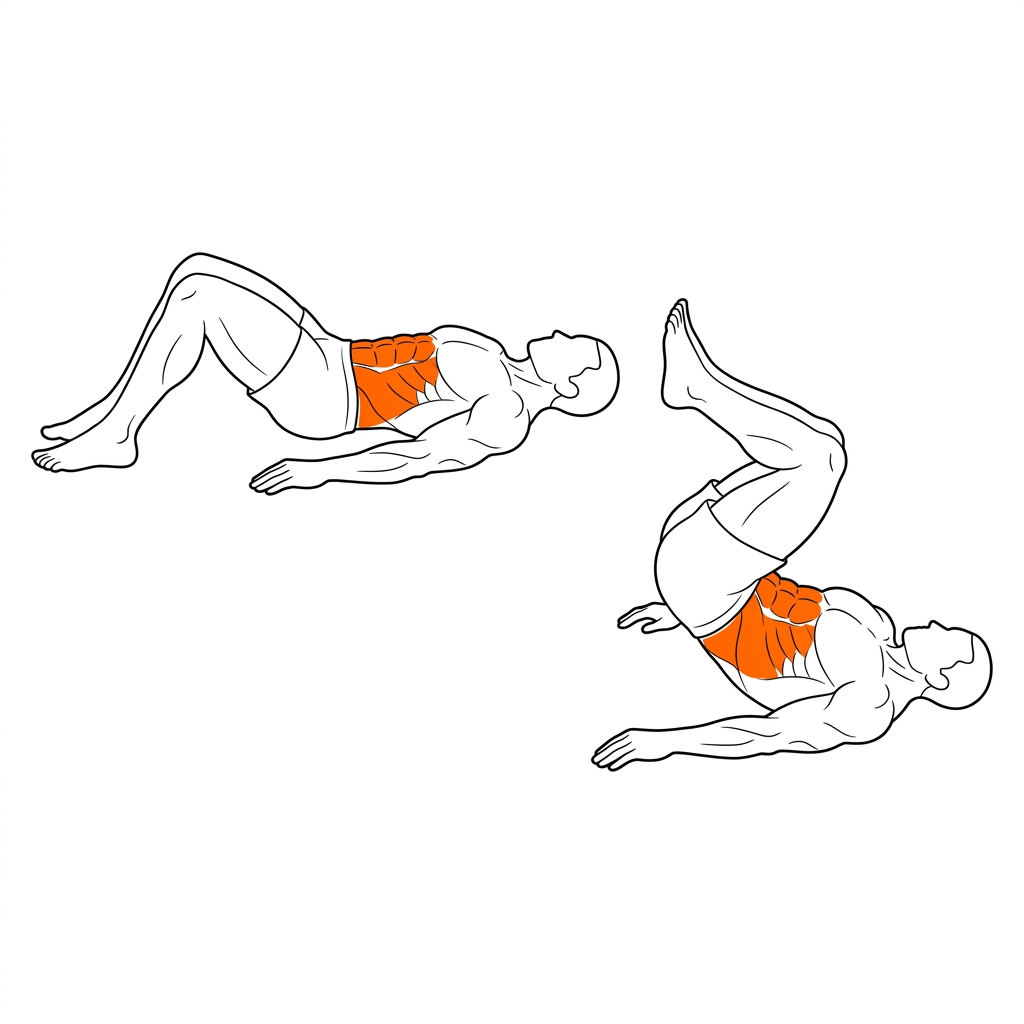
Lie on your back, knees bent at 90°. Contract your abs to lift your hips off the floor and bring your knees toward your chest. Lower slowly. Your lower back should stay pressed to the floor throughout.
The reverse crunch is a bottom-up movement that hits the lower abs harder than any standard crunch. It’s also one of the most underused exercises in any gym.
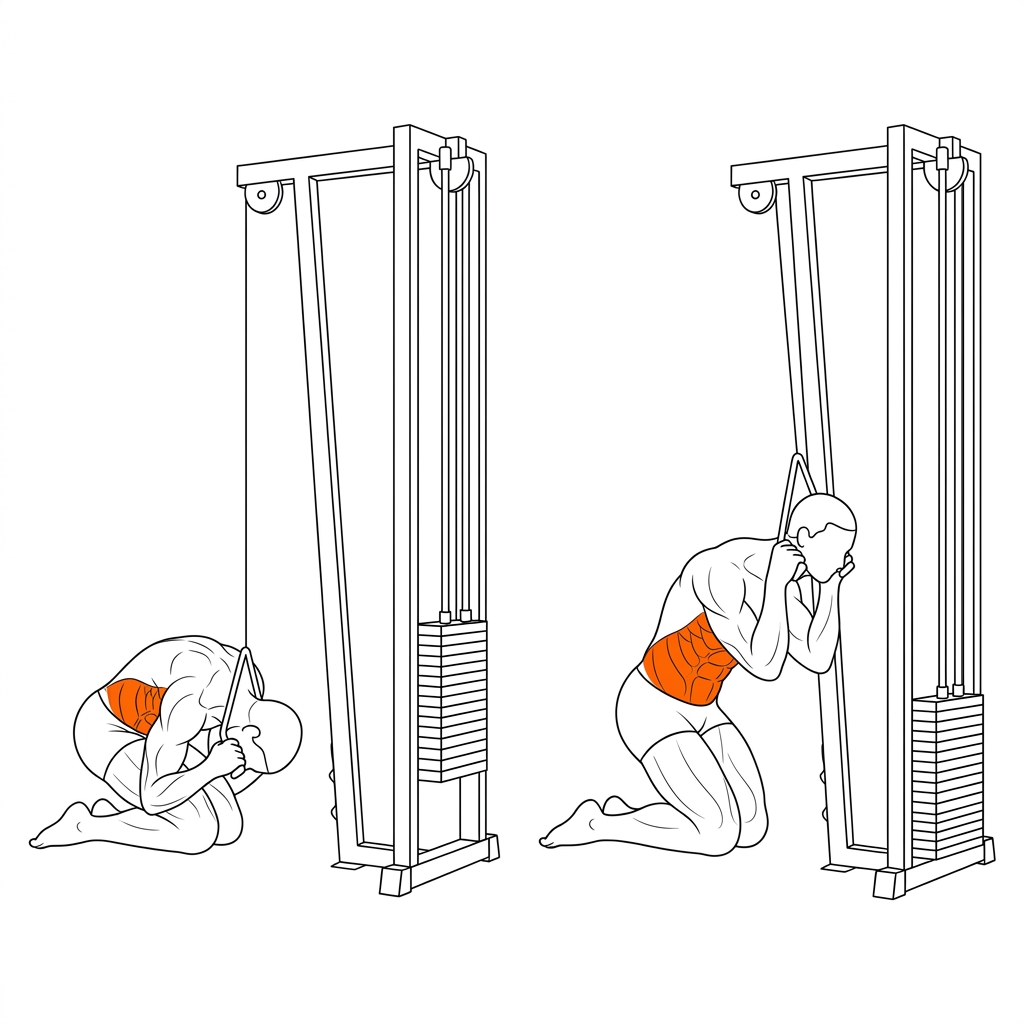
Kneel in front of a cable machine with a rope attachment at head height. Hold the rope beside your head and crunch your rib cage down toward your pelvis. This is not a neck pull – the movement comes entirely from your abs.
The cable crunch lets you add progressive overload to your ab training – just like any other muscle. Most people never do this. That’s why most people’s abs don’t grow. If there’s no cable machine, do weighted crunches on a stability ball instead.
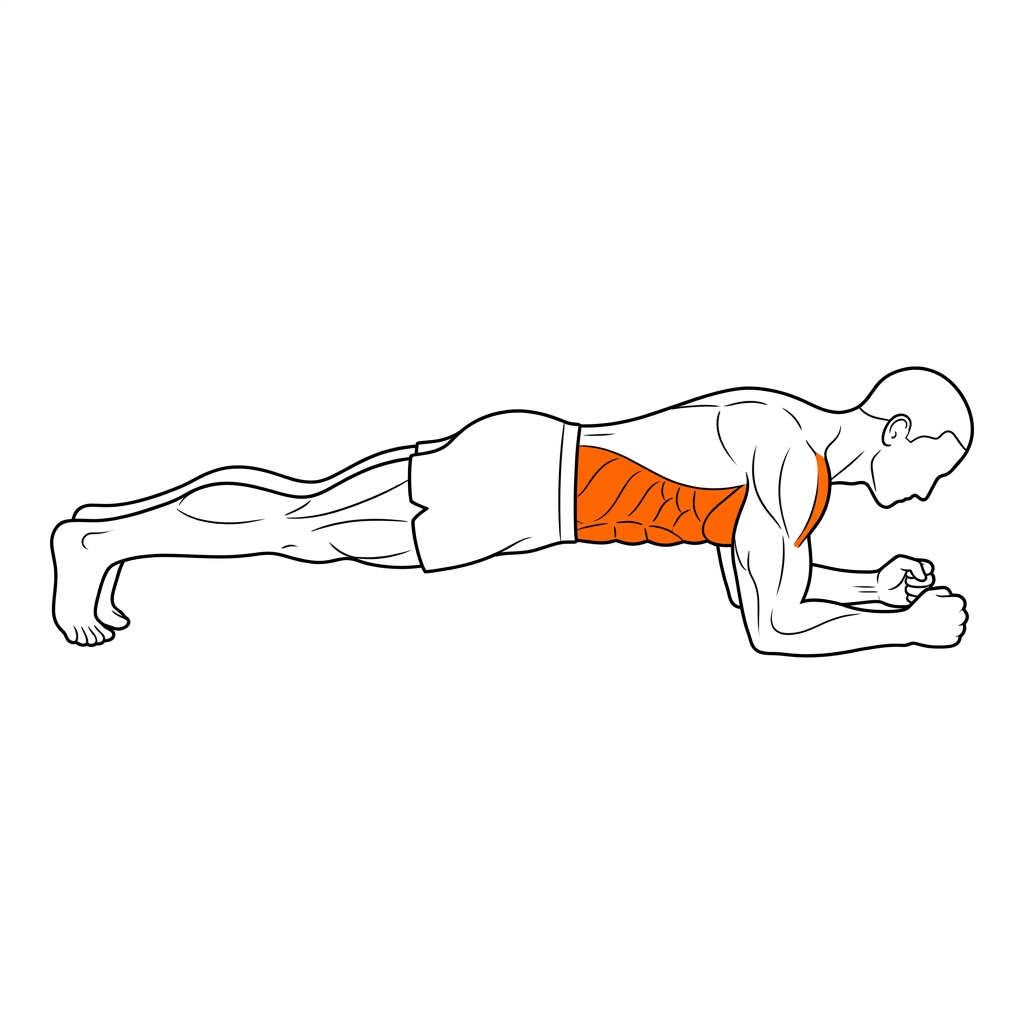
Forearms on the ground, elbows under shoulders, body in a straight line from head to heels. Brace your abs as if someone is about to punch you. Squeeze your glutes.
The plank is not just about time. A 30-second plank with full tension beats a 90-second plank with loose form. Once you can hold 60 seconds consistently, add a weight plate on your back.
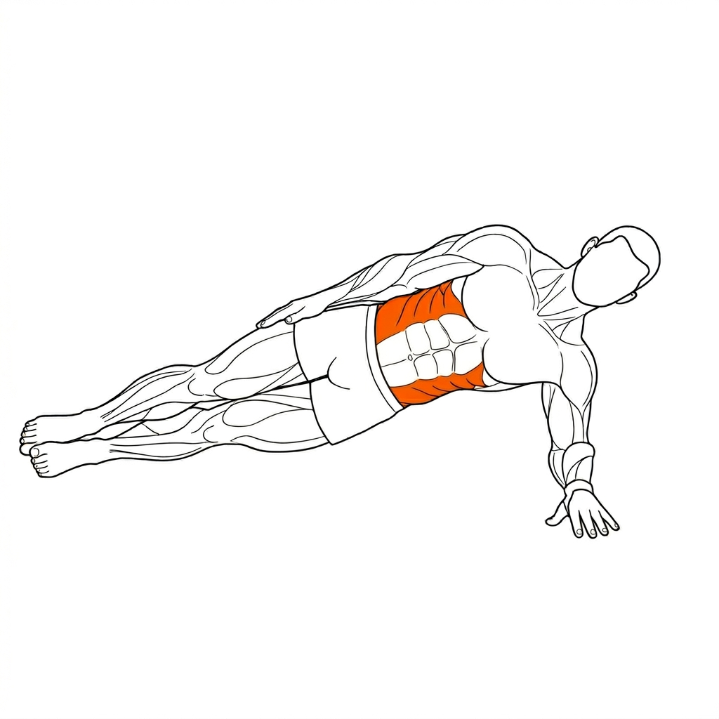
Lie on your side, propped on one forearm. Stack your feet, lift your hips off the ground, and hold. Keep your hips stacked – don’t let them rotate.
Your obliques are what give your waist its shape. Most people ignore them completely. Side planks are one of the most effective oblique exercises you can do – and they require nothing but a floor.
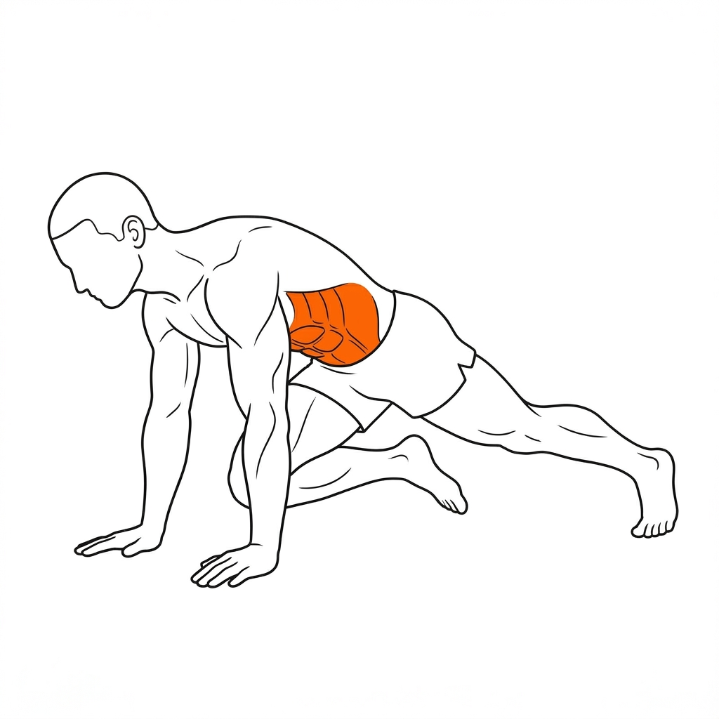
Start in a high plank position. Drive one knee toward your chest, then quickly switch. Keep your hips low and your core tight throughout.
Do these slowly to build core tension, or fast to add a conditioning element at the end of your workout. Either way, your abs will feel it.
Sit-ups.
The exercise everyone learned in school. The one you’ve probably done thousands of times. The one that’s still in half the ab workouts on YouTube.
Here’s the problem: sit-ups don’t actually train your abs that well. Most of the work is done by your hip flexors – the muscles that pull your torso up. Your abs are involved, but they’re not the prime mover. You’re getting tired hip flexors and a sore lower back instead of growing abs.
That sore lower back isn’t random. Sit-ups put repeated compression and shear force on your lumbar spine. The U.S. Army removed them from their fitness test in 2020 because of how often they led to back injuries – and the Army is not exactly known for being soft on training.
There’s also the progression problem. Once 50 sit-ups are easy, you do 100. Then 200. You’re chasing endurance instead of growth. Abs are muscle. Muscles grow with progressive overload, not with rep counts.
Cable Crunches and Hanging Leg Raises hit your abs harder, with less stress on your lower back, and let you actually add weight over time. Real overload. Real growth.
The complete workout.
| Exercise | Sets | Reps / Time |
|---|---|---|
| Hanging Leg Raises | 3 | 10–15 reps |
| Reverse Crunch | 3 | 15 reps |
| Cable Crunch | 3 | 12–15 reps |
| Plank | 3 | 45–60 sec |
| Side Plank | 3 | 30–45 sec each |
| Mountain Climbers | 3 | 30 sec |
How often should you train abs?
2–4 times per week. Your abs are muscles – they need rest to recover and grow just like any other muscle group. Training them every day won’t get you there faster, it’ll just keep them in a constant state of fatigue.
Add this workout at the end of your training session, not at the beginning. If your abs are pre-fatigued, your performance on every other exercise suffers.
This workout will build a stronger, denser core. But visible abs come from two places: the training you do in the gym, and the food you eat outside of it. You don’t need to go on a crazy diet. But if you want to see your abs by summer, you need to be in a moderate calorie deficit consistently. That’s the part no one likes to hear – and the part that actually matters most.
Train hard. Eat well. Be patient.
Looking for more arm training? Check out our Forearm Workout – build the grip strength that makes every pull movement stronger.